PLANAPP and REPLAN
PLANAPP and REPLAN play a key role in strengthening a vision of the future that is inclusive, sustainable, and transformative, guiding the development of public policies, strategic positioning, and the country’s development.
Challenge
To help develop a Report on Visions and Scenarios for Portugal in 2050, the two entities sought to involve citizens in active participation processes through collaborative sessions and interviews. This involvement needed to result in the creation of outputs that reflect ideas and proposals for new ways of adapting and responding to the challenges of an increasingly uncertain and complex world.
Key questions emerged: How to engage citizens meaningfully in long-term strategic thinking? How to translate abstract megatrends into concrete visions and scenarios? How to ensure diverse voices—across generations, geographies, and backgrounds—shaped Portugal's future?
Our approach
Develop a participatory and co-creative project, based on a methodology of Systemic Thinking and Strategic Foresight.
We developed a participatory and co-creative project, based on a methodology of Systemic Thinking and Strategic Foresight, encompassing three core activities:
- 1. Collaborative sessions with universities and schools to co-create exploratory outputs in response to the megatrends
- 2. In-depth interviews with citizens representing diverse profiles
- 3. Exhibition and presentation of results
Outcome
A comprehensive participatory process that brought Portugal’s future to life through collective imagination and actionable insight.
We engaged 80 participants aged 15-25 across six collaborative sessions nationwide and conducted 12 interviews with citizens aged 20-76, representing diverse regions, educational backgrounds, and life experiences. Through a structured methodology—from fictional newspapers and future scenarios to personas, artefacts, and narratives—participants explored how Portugal could evolve across social, technological, environmental, and political dimensions.
The results revealed four central themes structuring Portugal's collective vision: Technology and Digital Societies, Climate and Green Solutions, Society and Politics, and Personal and Social Development. These insights were integrated into the Portugal 2050: Scenarios and Vision Project, providing PLANAPP and REPLAN with a citizen-grounded foundation for strategic planning that reflects the voices of those who will shape and inhabit Portugal's future.
What we did
Together with the PLANAPP and REPLAN team, we developed and facilitated six collaborative sessions at secondary schools and universities nationwide.
These sessions aimed to surface participants’ visions and scenarios for Portugal in 2050, inspired by the megatrends outlined in the report.
Our selection criteria ensured balanced and inclusive participation: geographic coverage (urban-rural; north to south), diversity of study areas and institutional sizes, and variety in student backgrounds and experiences.
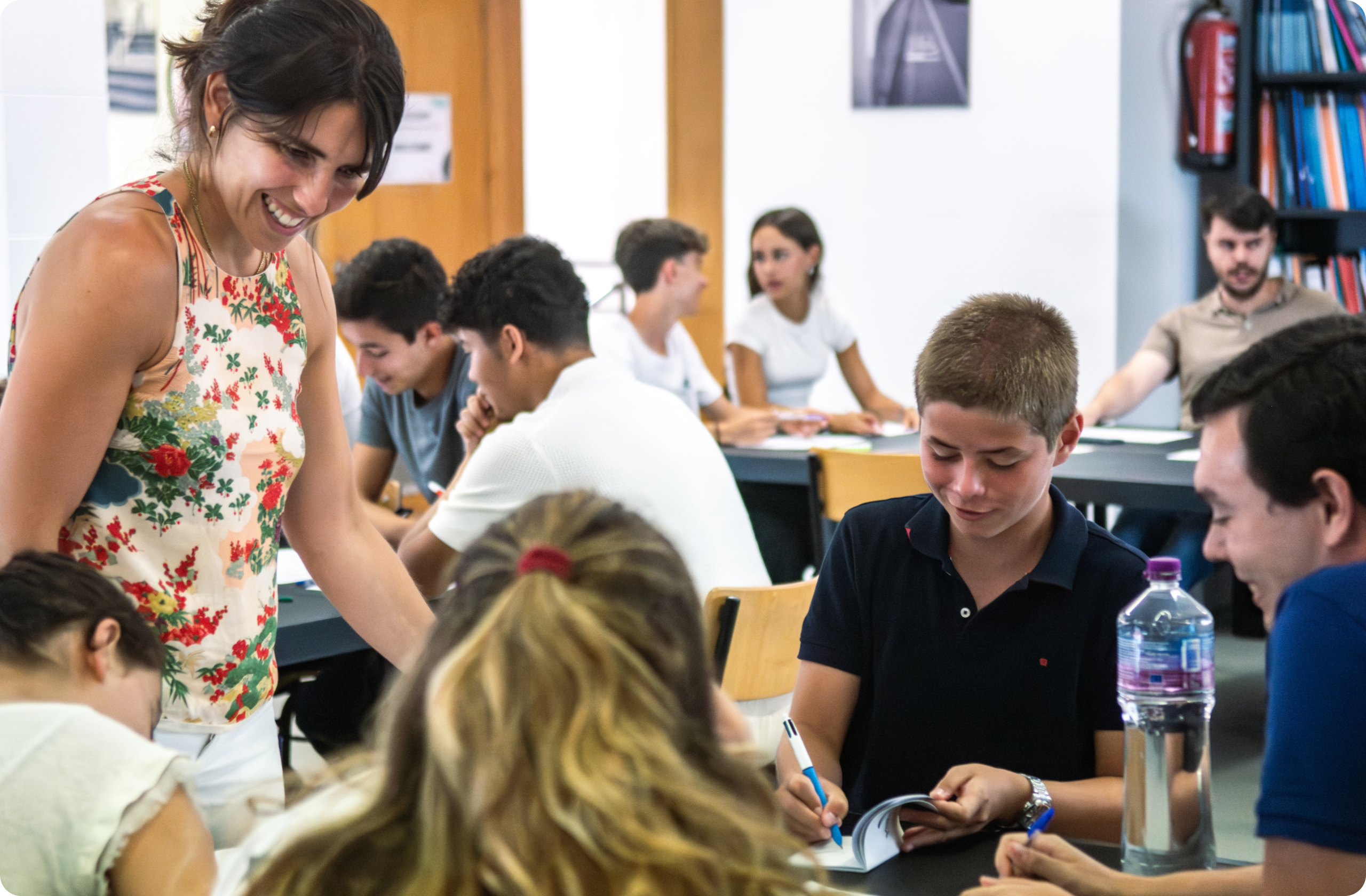
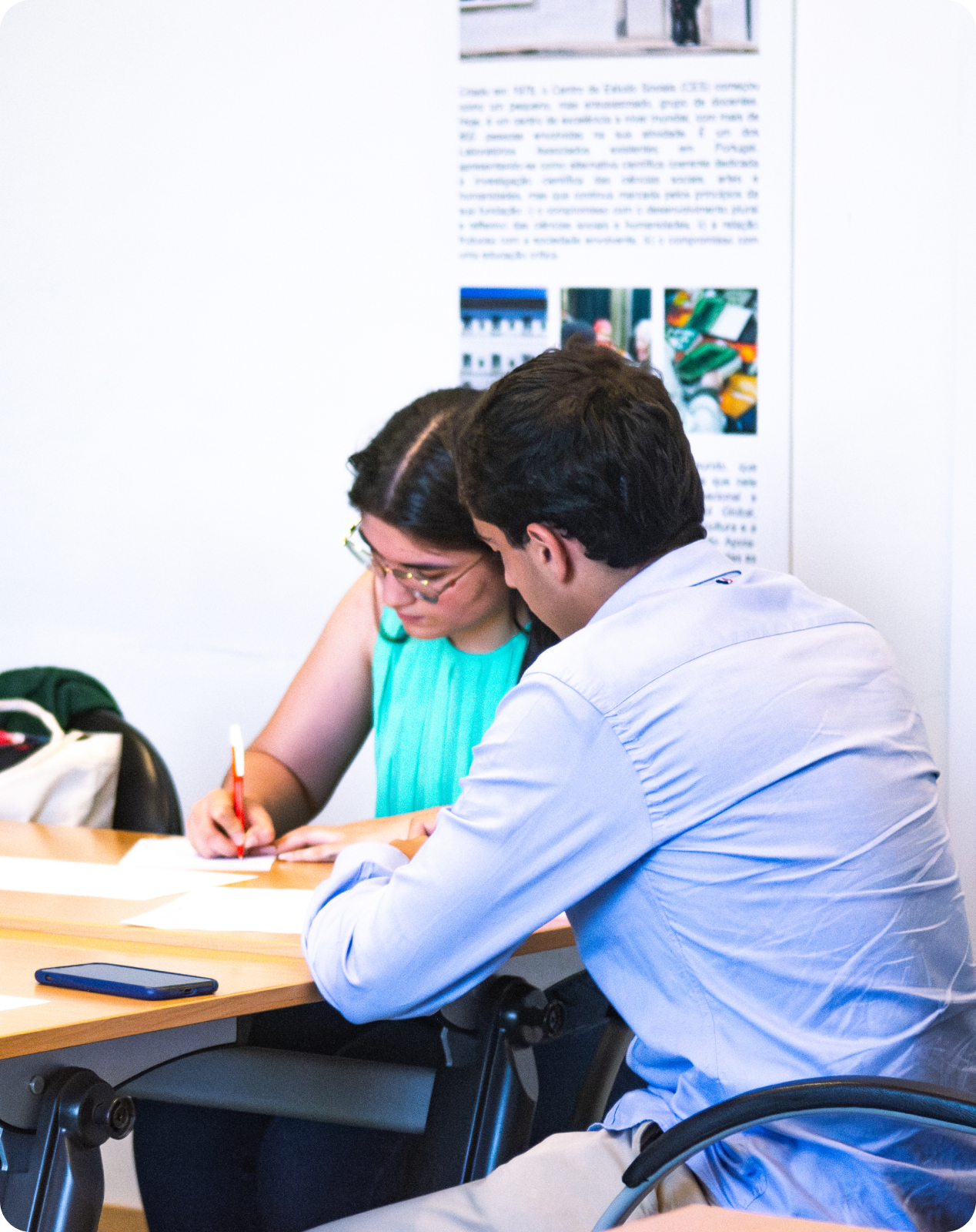
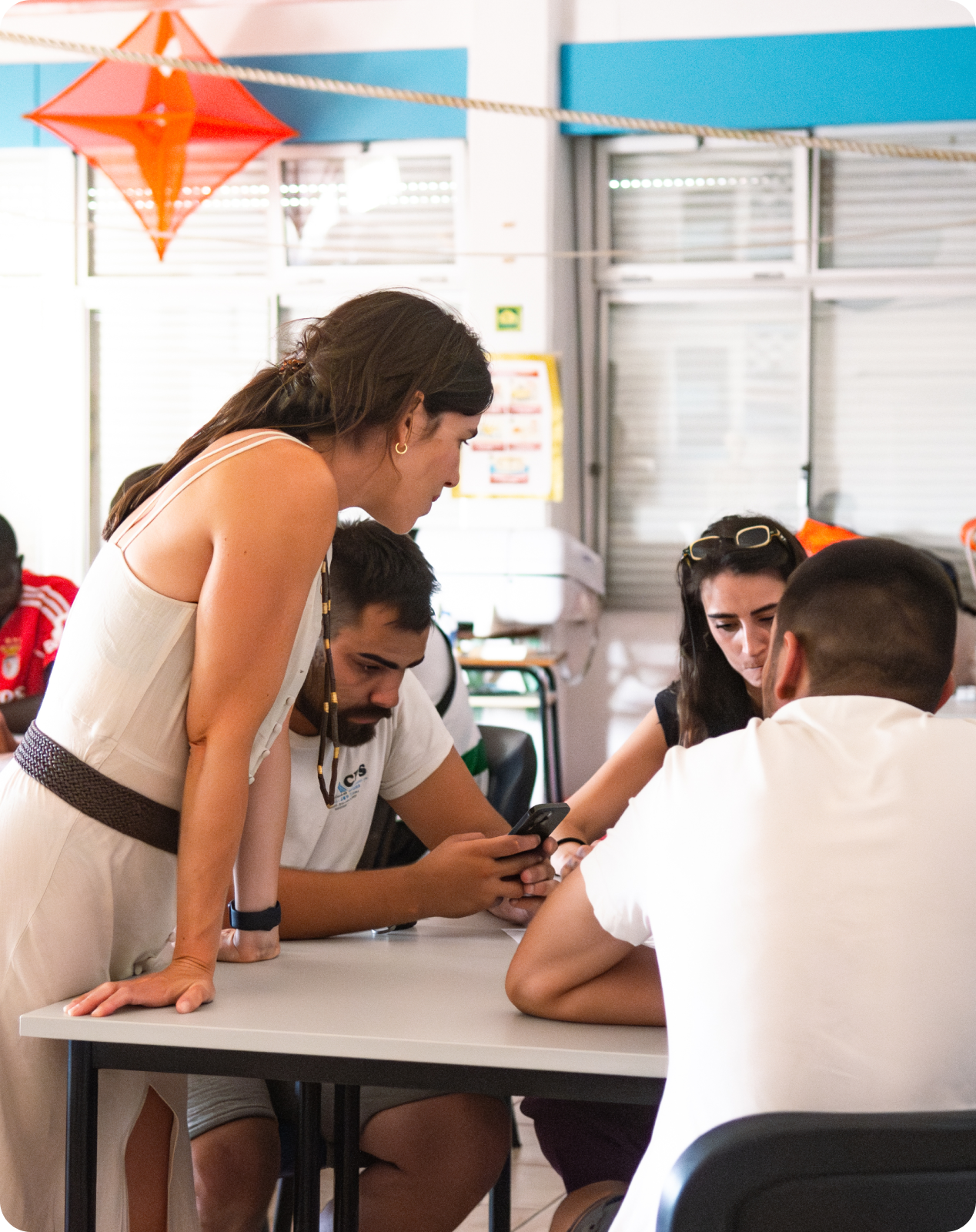
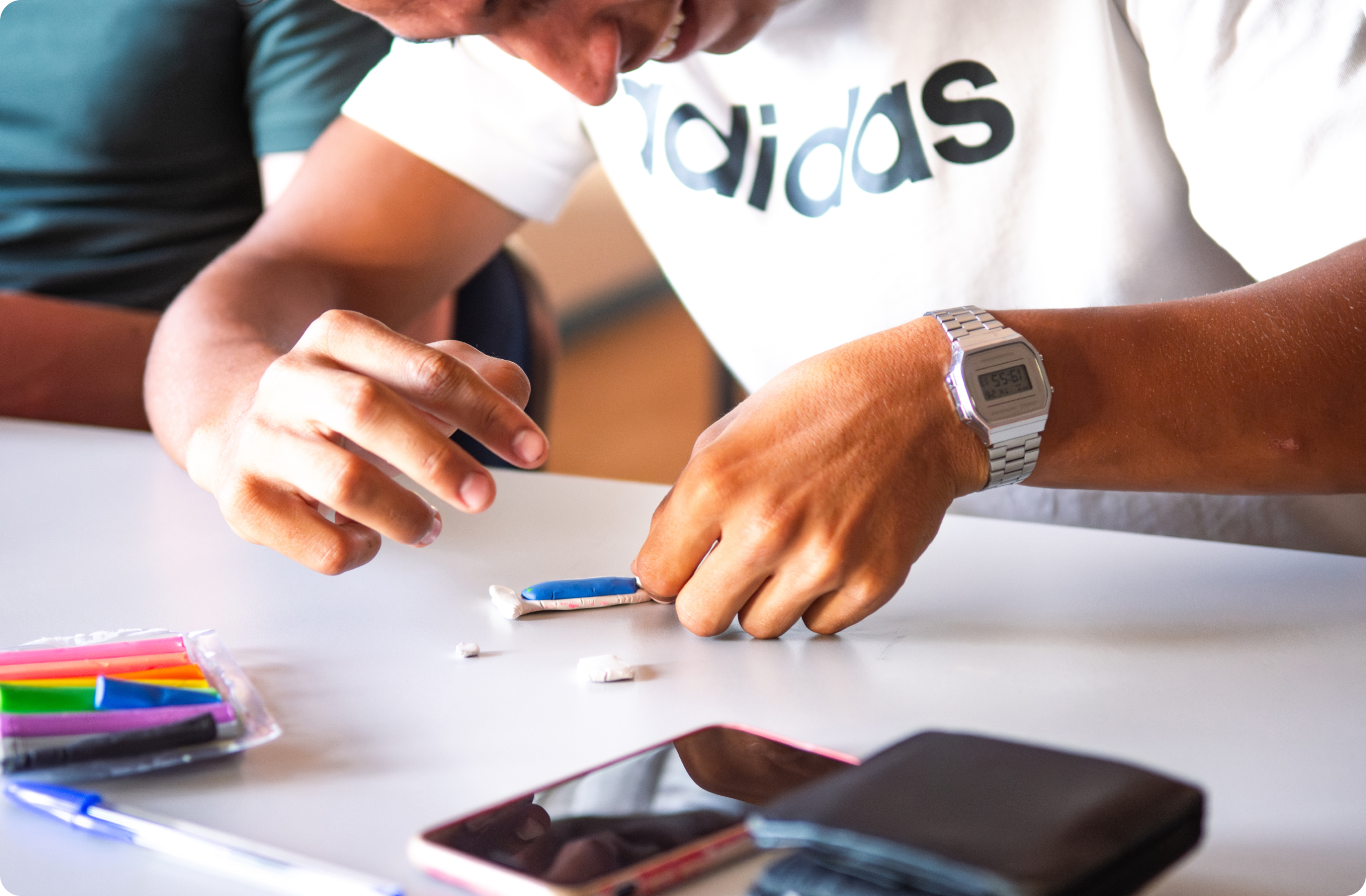
We developed a comprehensive toolkit compiling exercises, methods, dynamics, and practical tips used in collaborative sessions. The goal was to provide a structured guide enabling any facilitator to plan and conduct a session smoothly and with focus, even without prior experience.
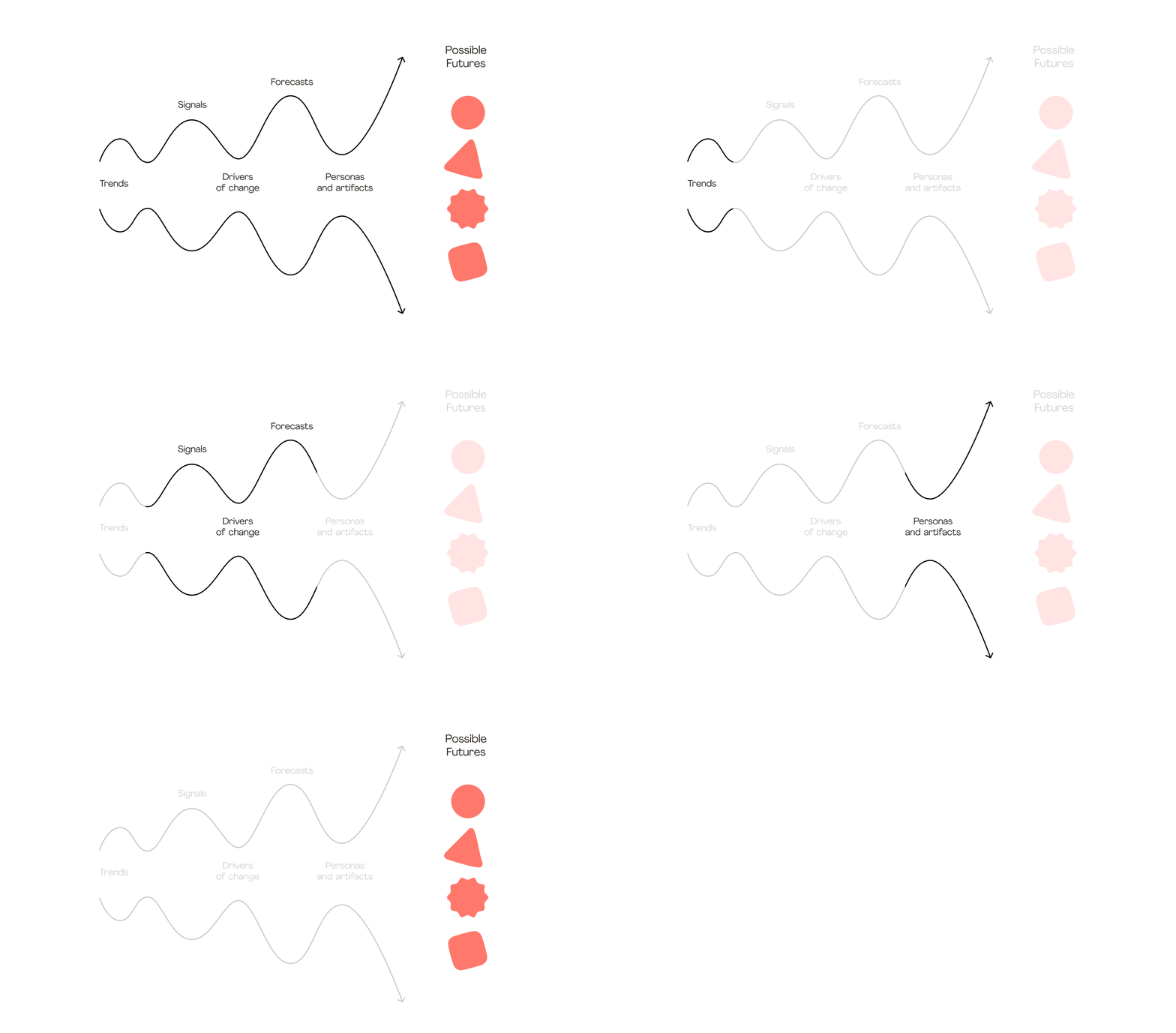
The collaborative sessions followed a structured futures thinking approach that guided participants through five interconnected stages: trends, scenarios, personas, artefacts, and narratives.
Trends: We began with the nine megatrends previously identified by PLANAPP and REPLAN as a starting point, using a fictional newspaper featuring nine different headlines, each related to a megatrend. Based on these headlines, participants constructed coherent scenarios representing an optimistic but realistic vision of Portugal’s future, incorporating the developments and transformations associated with these megatrends.
Scenario: Here, we set the stage for exploring the future by describing a specific and plausible context based on the defined megatrends that went beyond the present. We characterized the components of the social, technological, economic, political, and environmental aspects of this imagined future, thus providing the basis for creating characters and artefacts, allowing for a consistent and coherent exploration of future possibilities and their potential implications.
Personas: The creation of characters brought the future scenario to life through the individuals who inhabited it. These characters had motivations and challenges that resonated with the context of the scenario. By developing characters with depth and complexity, and considering their points of view, we were able to explore how different people might be affected by and interact with future changes, enriching our understanding of the social and human implications.
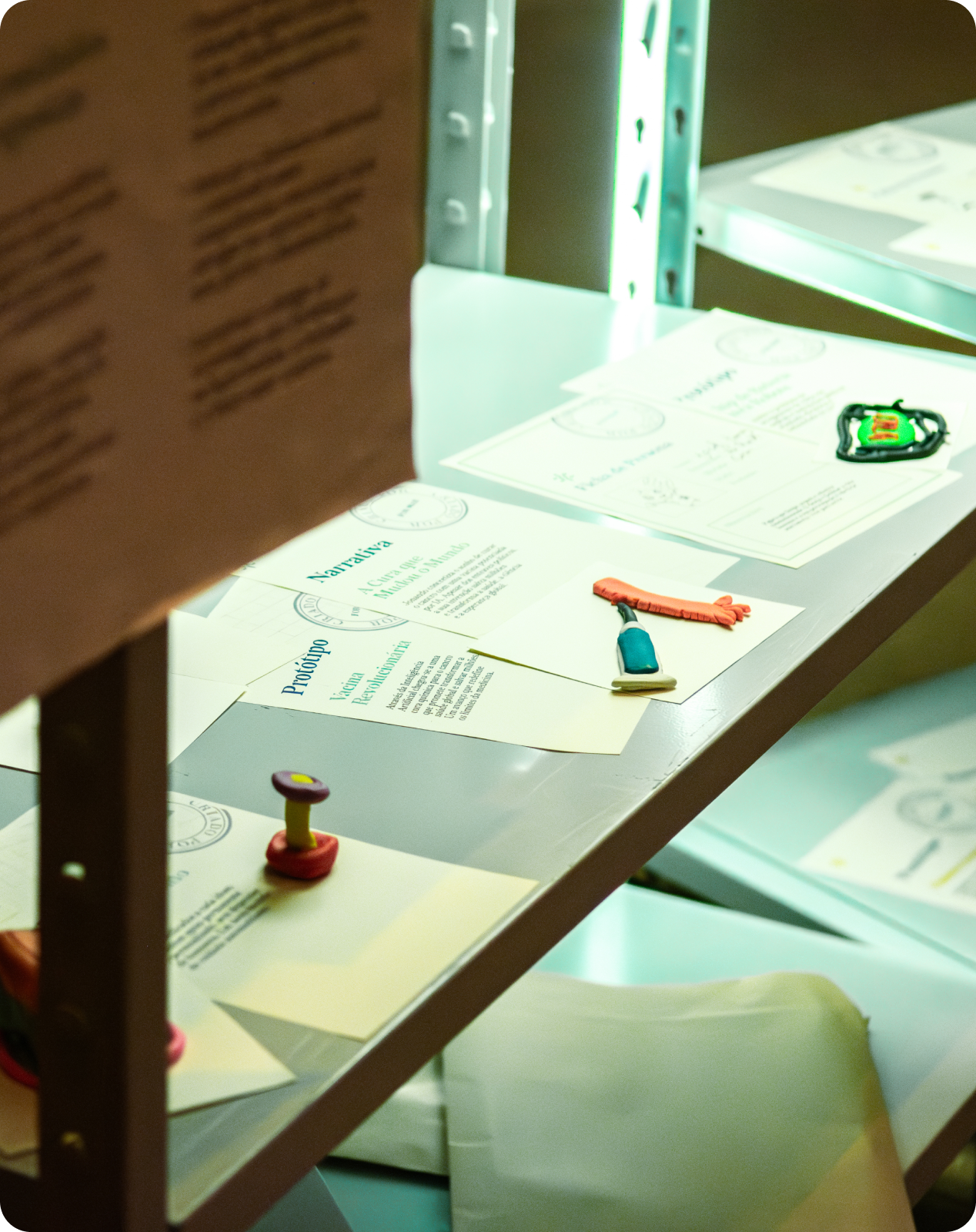
Artefacts: Creating artefacts involved designing objects, technologies, services, or systems that could exist in the defined future scenario. These artefacts served as tangible manifestations of the changes and characteristics of that future, helping to visualize and concretize abstract concepts.
Narratives: Finally, narrative development showed us possible futures through a story or sequence of events that unfolded within the future scenario, focusing on the characters’ experiences and their interaction with artefacts. This narrative allowed for a deeper immersion into the future being explored, facilitating understanding of the dynamics, challenges, and opportunities that might arise.
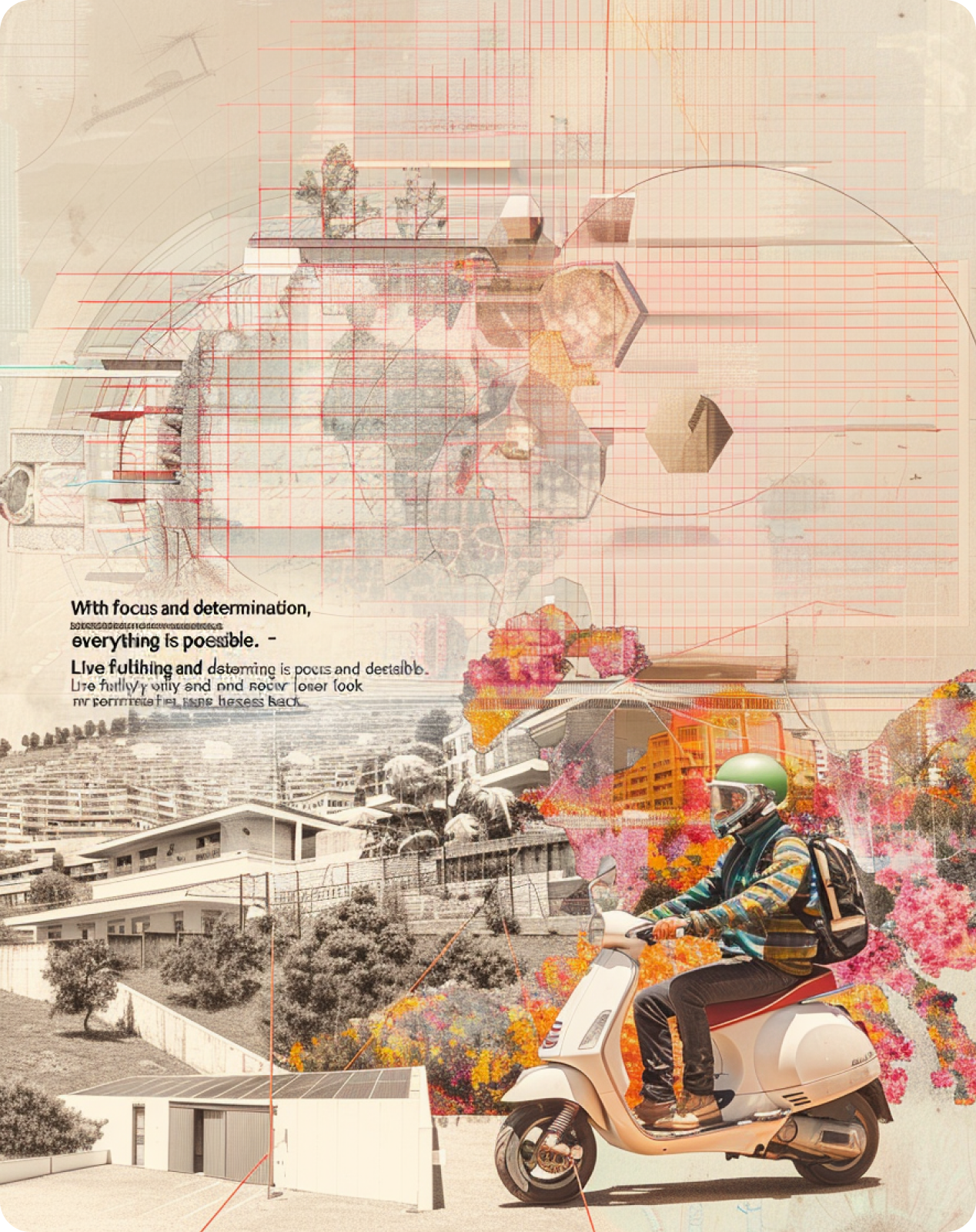

The aim of these interviews was to bring citizens’ voices to the Portugal 2050: Scenarios and Vision project, capturing their visions for 2050, expected scenarios, and the trends shaping Portugal’s future.
As an essential component of With Company’s methodology, these in-depth interviews were conducted in a safe and welcoming environment where participants shared their perceptions on the main challenges and opportunities ahead.
Each 45-60 minute interview was followed by a summary highlighting key testimonials and messages that enriched the Portugal 2050 project.
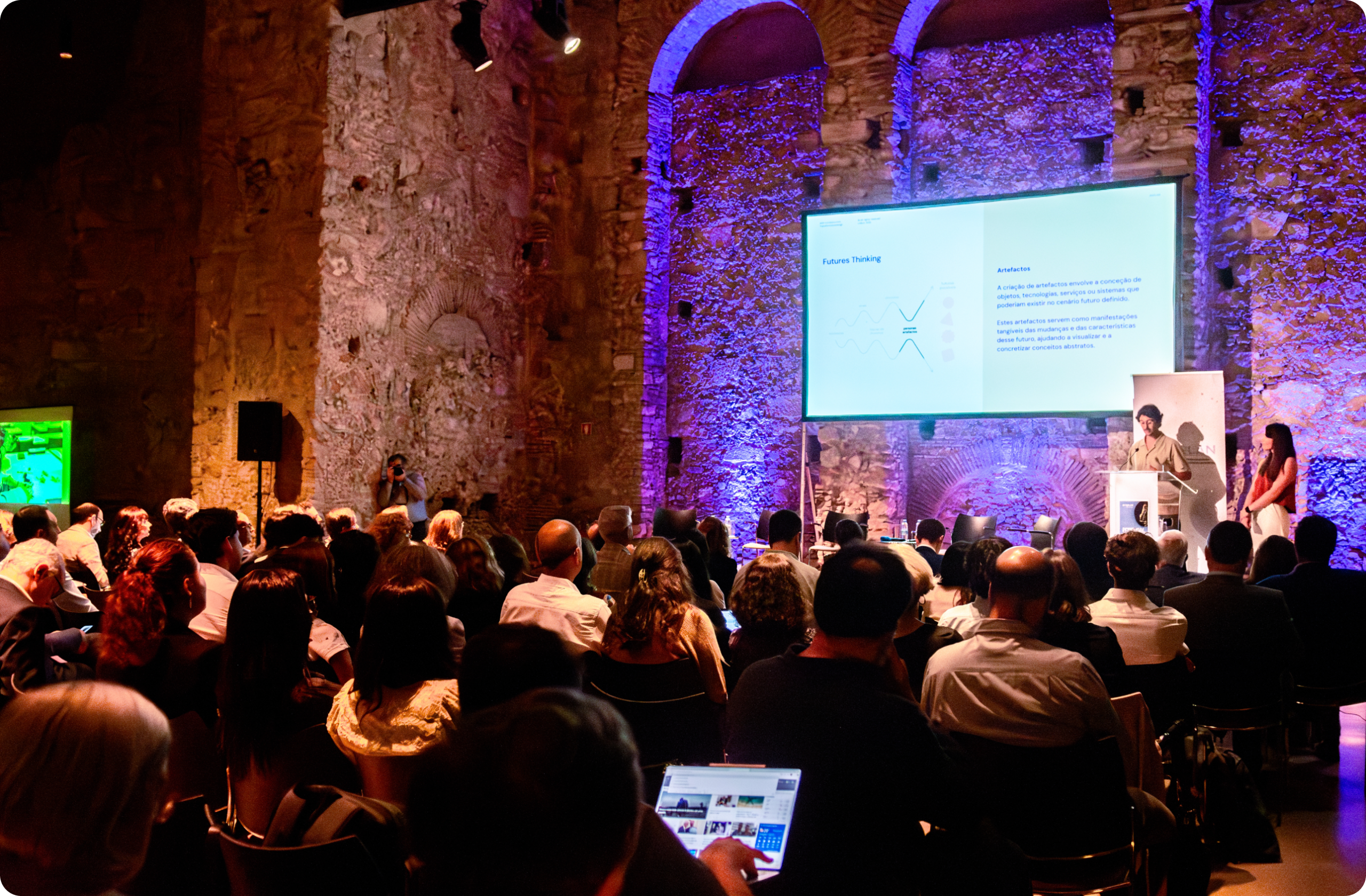
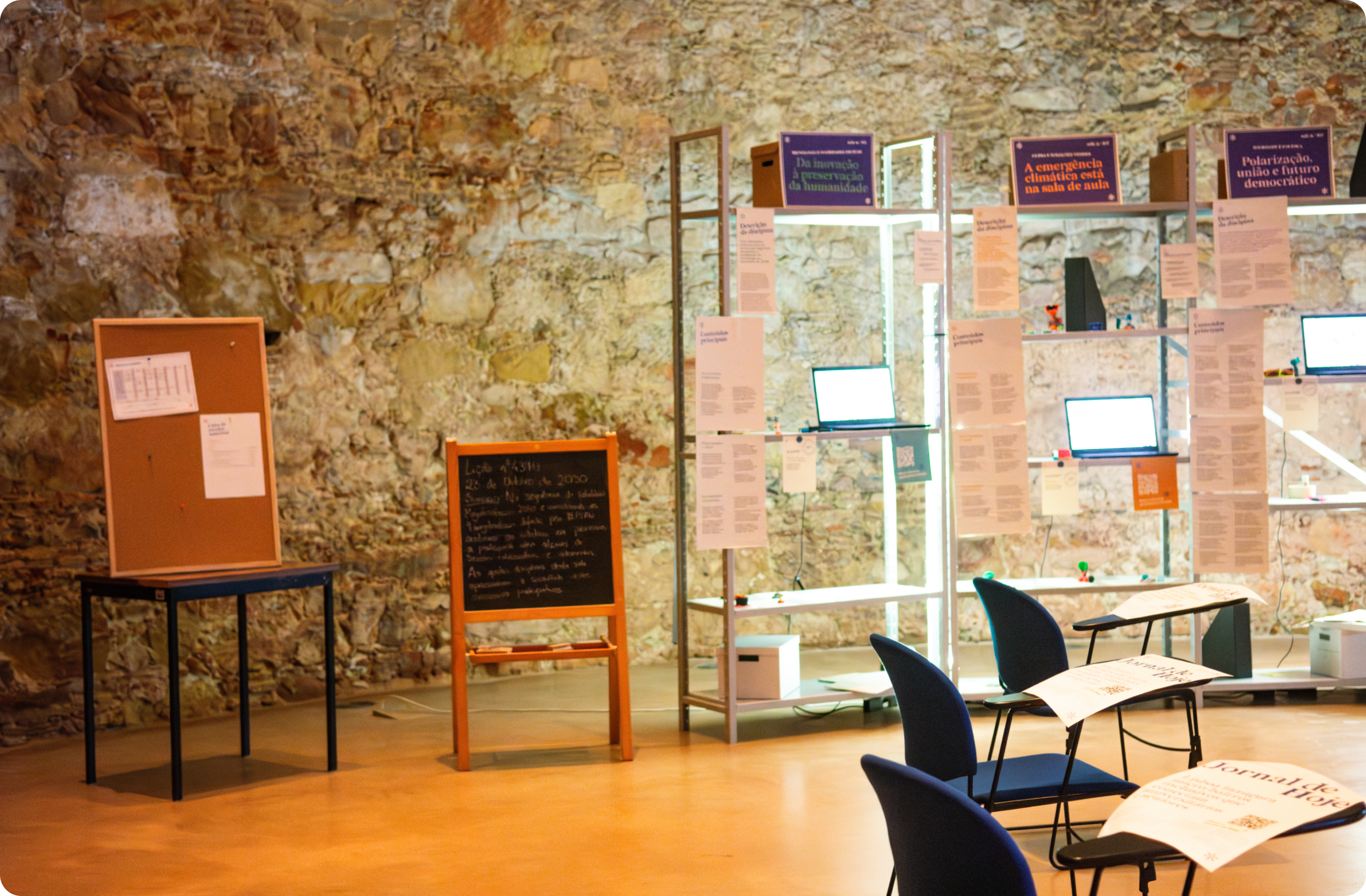
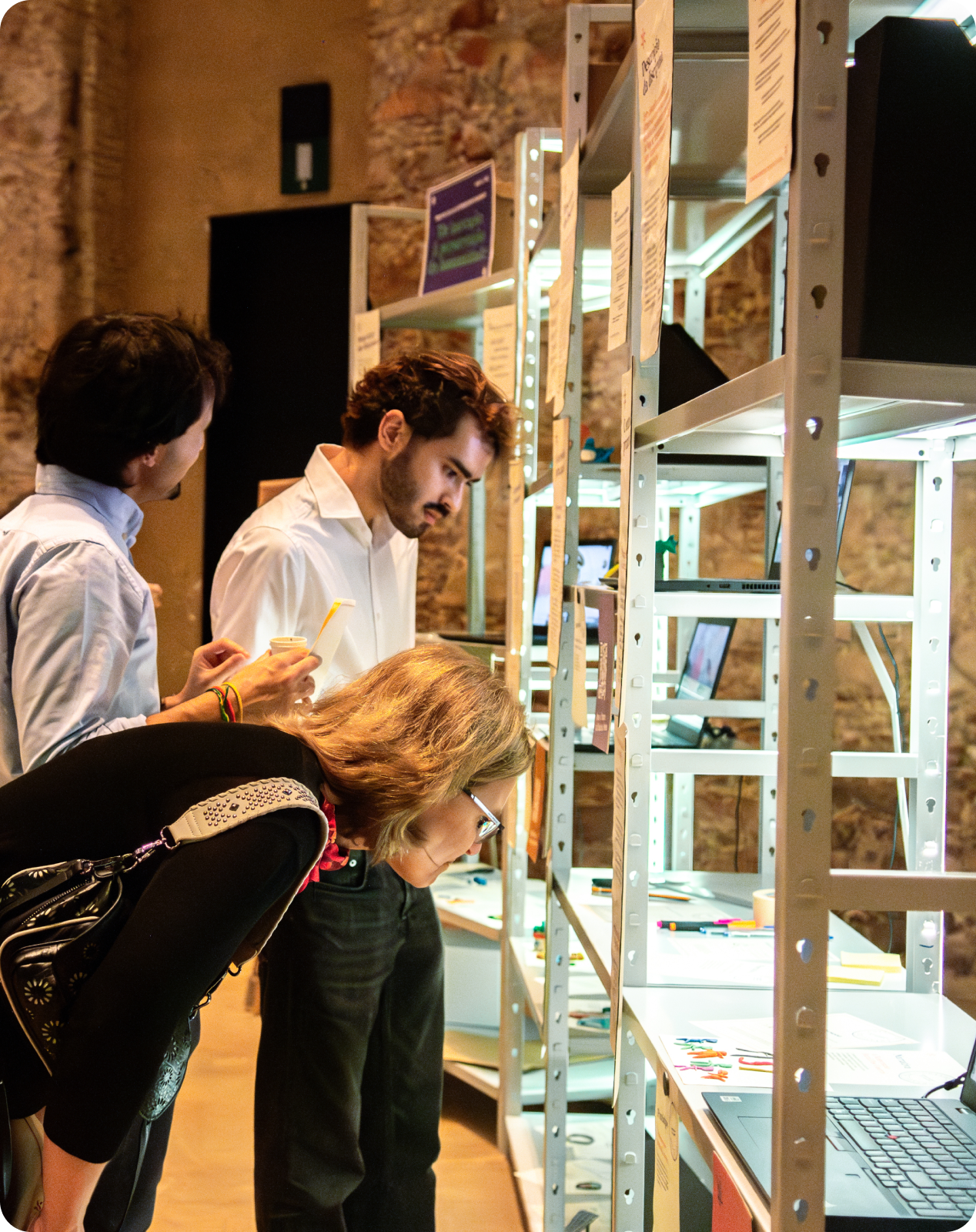
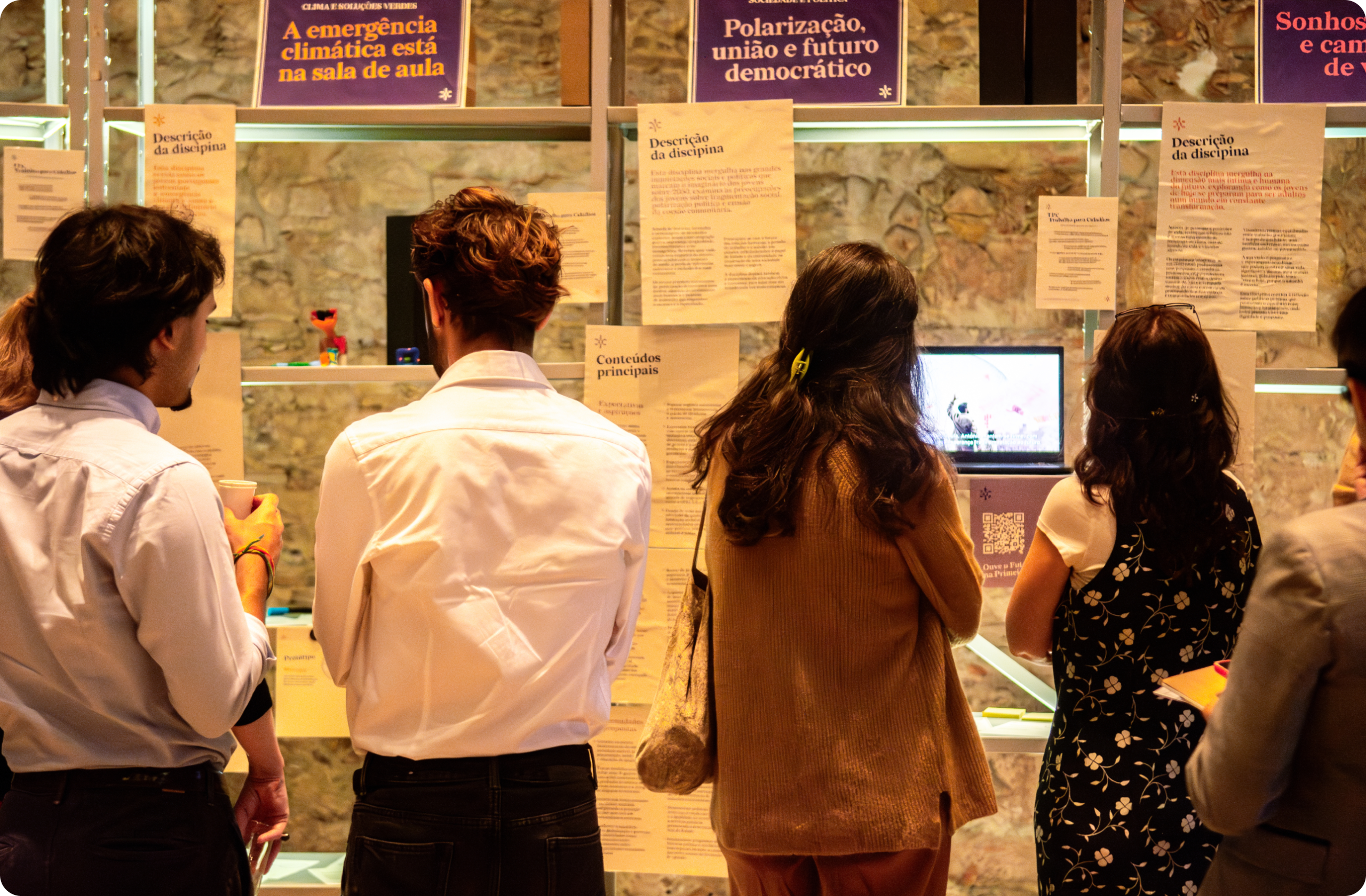
During the Portugal 2050 – Prospective Meeting and Workshop, we created an exhibition showcasing the materials generated through previous activities. The exhibition featured the “newspaper of the future” along with videos, images, excerpts from testimonials, and the artefacts created during the collaborative sessions.
Presentation session
The With Company team presented the collaborative work carried out with students across different schools and universities. Following this presentation, attendees were invited to view the exhibition and participate in the collaborative session.
Collaborative session
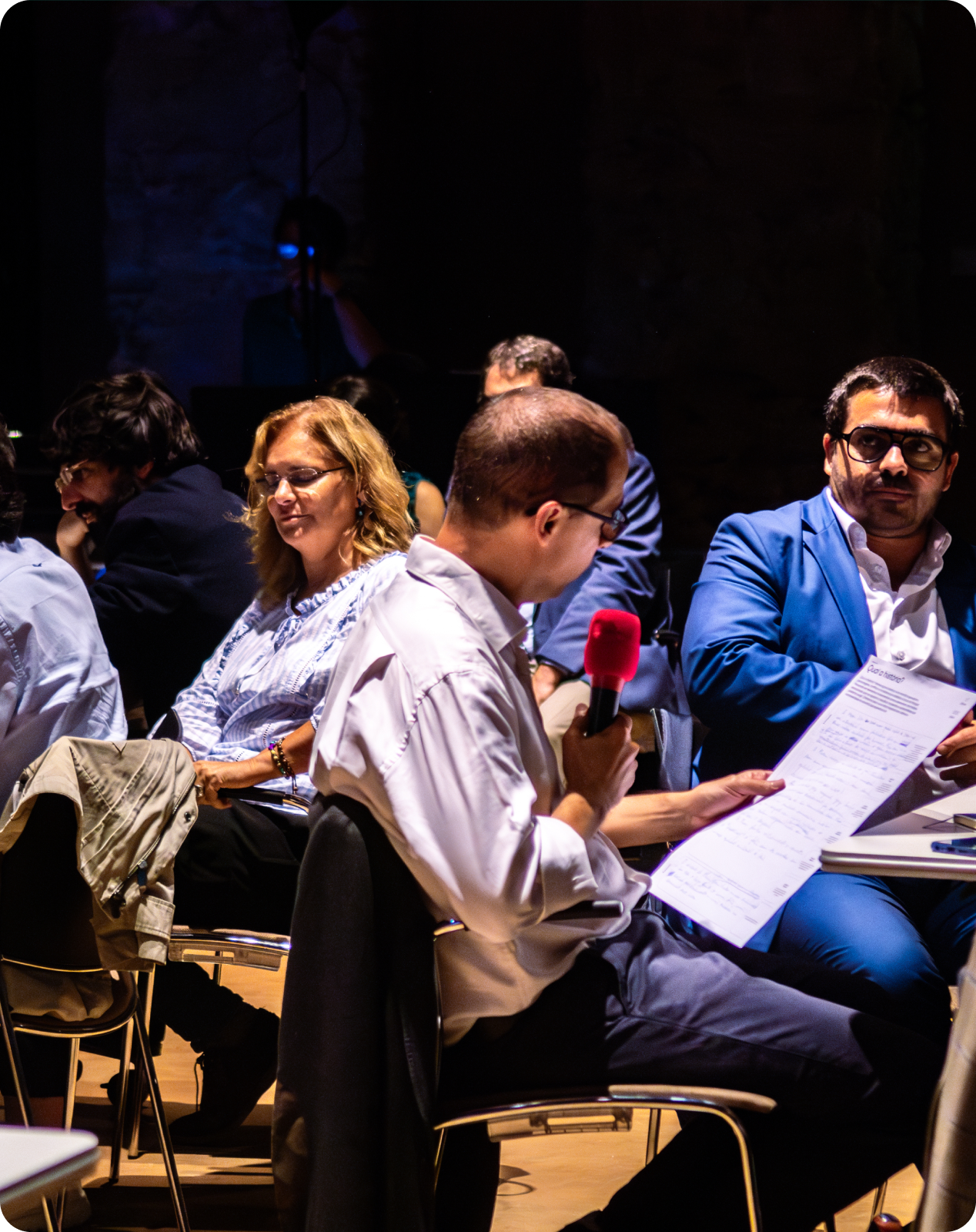
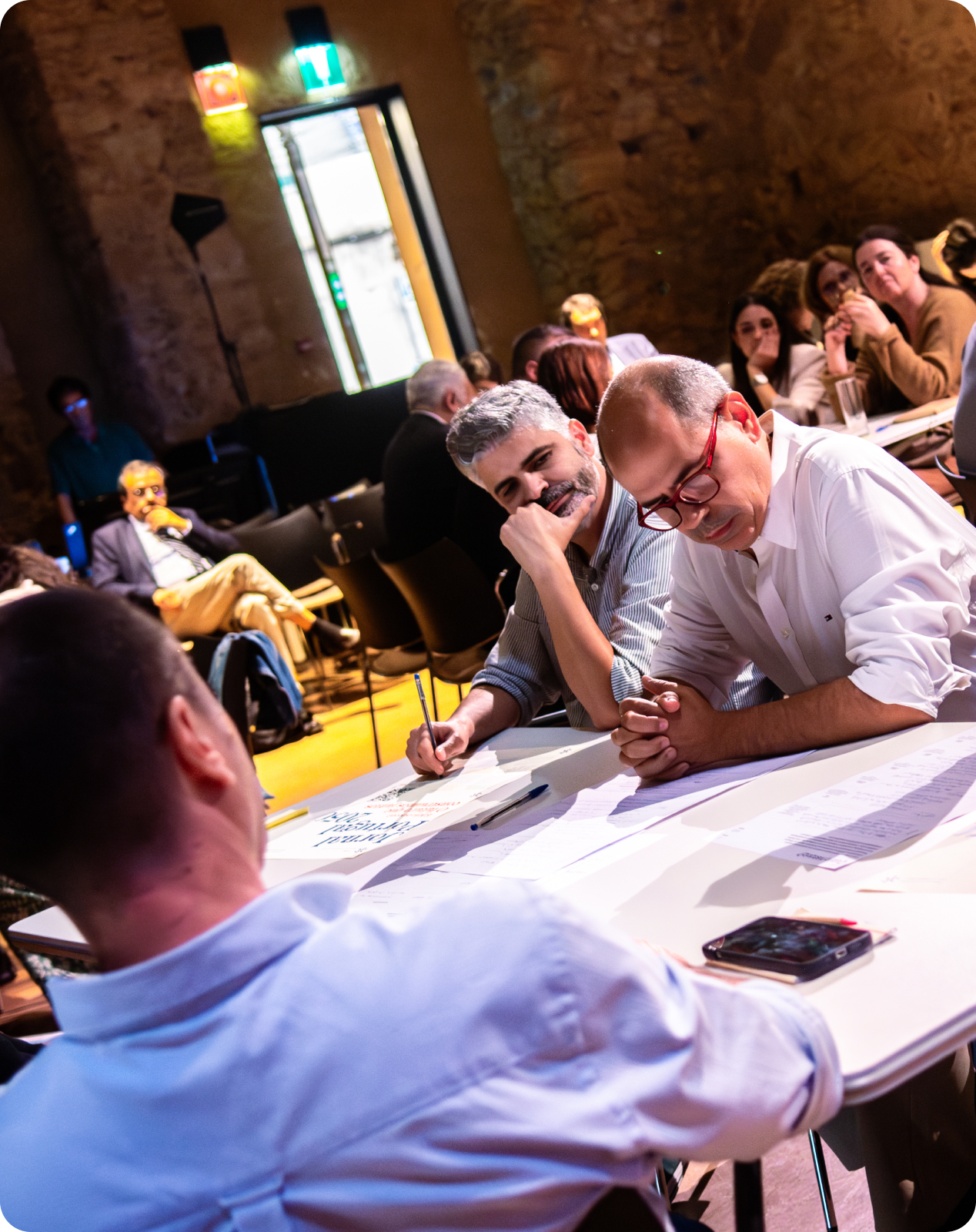
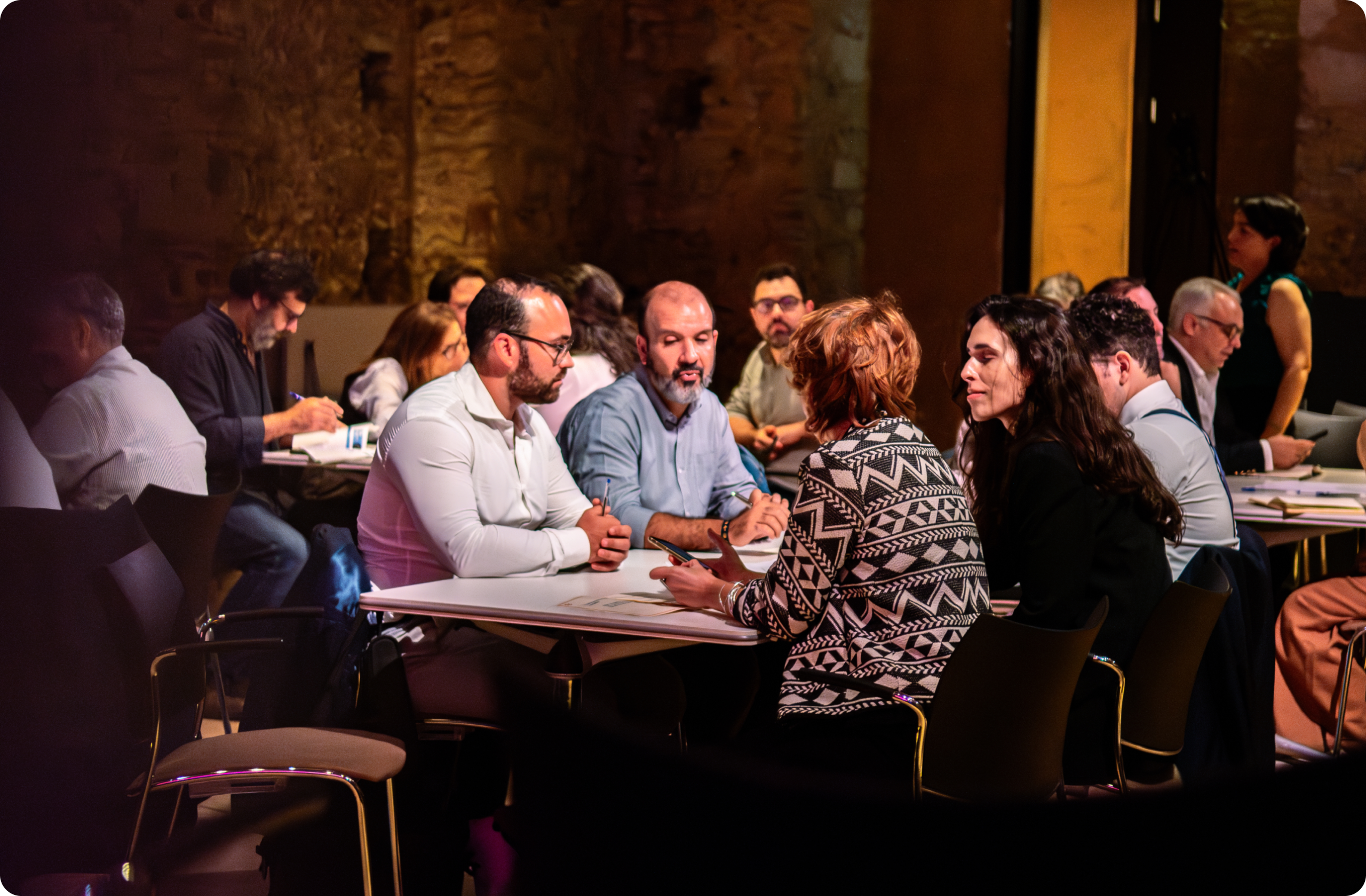
We replicated the session format used with schools and universities, adapting it to the meeting’s professional audience and programme—creating an engaging moment for organizations and professionals to experience the futures thinking methodology.
Results
The results exceeded our expectations. Across generations, participants demonstrated profound awareness of challenges including health, education, environment, technology, housing, work, politics, values, misinformation, territorial cohesion, immigration, and public safety.
Cross-sectional analysis revealed four central themes structuring the collective vision: Technology and Digital Societies, Climate and Green Solutions, Society and Politics, and Personal and Social Development.
The project succeeded in positioning citizen voices at the heart of Portugal’s strategic planning for 2050. The integration strategy—moving from megatrends to lived experiences through personas and narratives—created deep engagement and prepared insights for national policy development, establishing a new standard for inclusive strategic foresight in Portugal.